

Flat roofs are built to last — but no commercial roofing system lasts forever. Over time, even well-maintained roofs begin to show signs of wear that simple repairs can’t fix. Knowing when to repair versus replace your flat roof can save your business thousands of dollars and prevent major interior damage.
Here’s how to recognize the warning signs that it might be time to replace your flat roof, along with some expert guidance on what to do next.
1. Your Roof Is Near the End of Its Lifespan
Every roofing system has an expected service life:
| Roofing Type | Typical Lifespan |
|---|---|
| TPO (Thermoplastic Polyolefin) | 20–30 years |
| EPDM (Rubber Roofing) | 25–30+ years |
| PVC (Polyvinyl Chloride) | 25–35 years |
| Modified Bitumen | 15–25 years |
| Built-Up Roofing (BUR) | 20–30 years |
If your roof is approaching or past these averages, even if it looks “okay,” it’s smart to schedule a professional inspection. The materials may have weakened to the point where a full replacement is more cost-effective than ongoing repairs.
2. Frequent Leaks or Water Intrusion
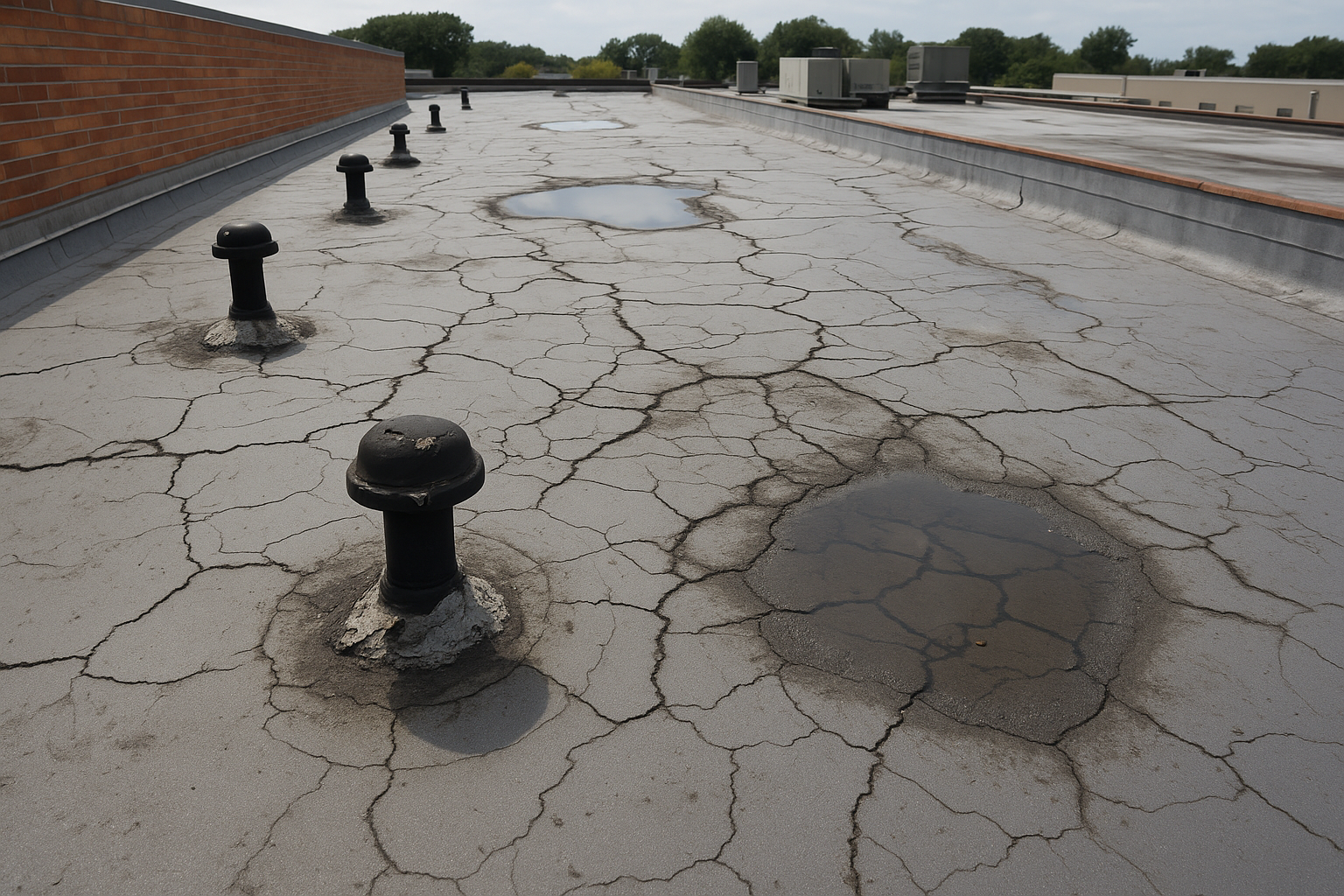
A single small leak may be repairable — but if leaks are recurring or spreading, that’s a major red flag. Flat roofs are especially vulnerable to standing water, seam failures, and punctures.
If you’re dealing with:
Persistent leaks after multiple repairs
Water stains on ceilings or walls
Mold or mildew growth inside the building
…it’s likely the waterproofing layer has failed, and a replacement may be necessary.
3. Ponding Water That Doesn’t Drain
Flat roofs are never truly flat — they’re built with a slight slope for drainage. When that drainage stops working, ponding water can form, which adds significant weight and accelerates deterioration.
Signs of poor drainage include:
Pools of water that remain for more than 48 hours after rain
Sagging or soft spots underfoot
Algae or debris buildup in low areas
Over time, this constant moisture weakens seams, breaks down materials, and leads to leaks and rot.
4. Cracked, Blistered, or Bubbling Membrane
On single-ply systems like TPO, EPDM, and PVC, you may notice blisters or bubbles forming under the membrane. These are often caused by trapped moisture or heat expansion.
While small blisters can sometimes be patched, widespread bubbling usually signals that the roof’s adhesion and waterproofing are compromised — and patching it repeatedly may not hold up.
5. Seam or Flashing Failure
The seams and flashings are the most vulnerable areas of any flat roof. Over time, adhesives and sealants can dry out, separate, or crack.
If you notice:
Open seams between roof panels
Loose flashing around HVAC units or vents
Gaps where the membrane meets parapet walls
…it’s a warning sign that the roof’s watertight barrier is breaking down. In many cases, this happens toward the end of the roof’s lifespan and signals the need for replacement rather than repair.
6. Visible Damage or Wear to the Surface
Commercial flat roofs take a beating from sun, wind, and foot traffic. Look for these visible signs of aging:
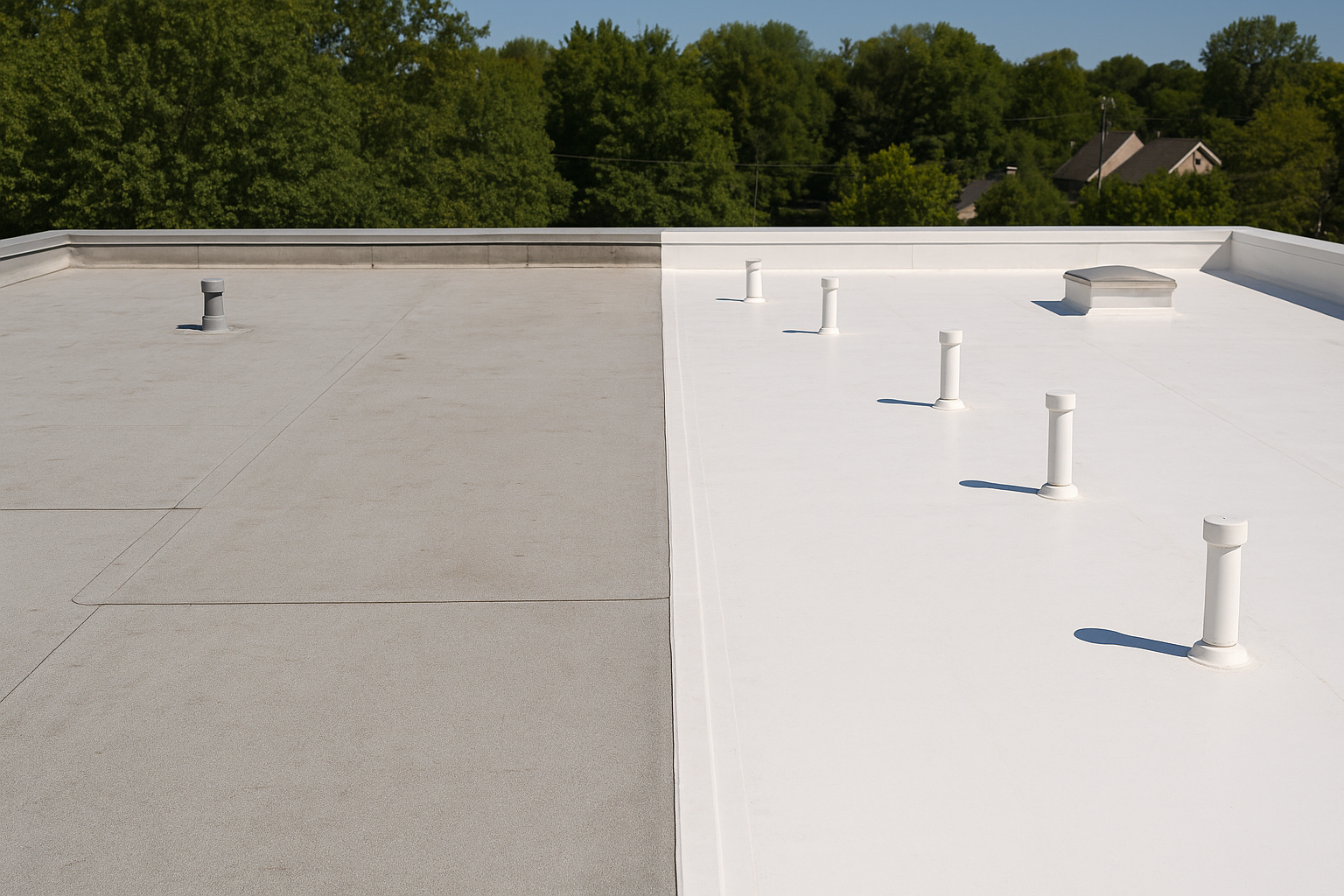
Fading or chalking (especially on TPO and PVC roofs)
Exposed reinforcement mesh
Punctures or tears from equipment or debris
Areas where the membrane is pulling away
Minor damage can be patched, but widespread deterioration usually points to deeper issues.
7. Rising Energy Bills
If your building’s cooling or heating costs have crept up, your roof could be the culprit. As roofing membranes age, they lose reflectivity and insulation efficiency.
For example:
TPO and PVC roofs may lose some of their reflective coating, allowing more solar heat into the building.
EPDM roofs may become less effective at sealing air and moisture.
Replacing your roof with a modern, energy-efficient system can cut energy costs and improve comfort year-round.
8. Structural Concerns or Sagging Areas
If your roof feels soft underfoot or you notice areas that appear to sag, this could indicate water saturation or deck damage beneath the membrane.
In these cases, the roof’s structural integrity may be compromised, and delaying replacement can lead to more expensive repairs later — including damage to the insulation or roof deck.
9. You’re Repairing More Often Than Not
One of the clearest signs it’s time to replace your roof is when you find yourself calling for repairs several times a year. While a single fix might cost a few hundred dollars, repeated patching adds up — and doesn’t solve the root problem.
When repairs start costing 25–30% of a new roof’s price, replacement becomes the smarter long-term investment.
How to Confirm Whether Replacement Is Necessary
Before you make a decision, have a professional commercial roofing contractor perform a detailed inspection. They can:
Use infrared or moisture scans to detect trapped water
Check seams, flashing, and insulation integrity
Provide a cost comparison of repair vs. replacement
In some cases, a roof restoration or recoating system can extend the life of your roof without full replacement — but this only works if the underlying materials are still in good shape.
How Long a New Flat Roof Can Last
Once replaced, a new flat roof can deliver decades of reliable protection with proper care:
TPO and PVC: 20–30+ years
EPDM: 25–35 years
Metal systems: 40–50 years
Choosing high-quality materials and ensuring professional installation are the two biggest factors in maximizing that lifespan.
Ohio Climate Considerations
In Ohio, commercial roofs face everything from summer heat and humidity to freezing winter snow loads. These seasonal shifts can stress roofing membranes, especially if drainage or insulation is inadequate.
For this reason, it’s crucial to choose a roofing contractor familiar with Ohio’s weather patterns and experienced in TPO, EPDM, PVC, and metal systems that perform well in all four seasons.
Final Thoughts
A flat roof that’s showing leaks, ponding water, or visible wear isn’t just an inconvenience — it’s a sign your building’s protective barrier is breaking down.
Knowing when to replace rather than repair can help prevent costly damage to your insulation, structure, and interior spaces.
If your commercial roof is aging or showing signs of failure, now is the time to schedule a professional inspection and plan a long-term solution.
Reach out to us today and schedule your free inspection consultation to see if it’s time for a new roof for your building.